



Nuclear Nonproliferation
The Savannah River Site (SRS) is dedicated to the National Nuclear Security Administration’s (NNSA) mission of safely managing and disposing of surplus weapon-grade materials.
Leading Integration in Plutonium Disposition Operations and Programs
Preventing nuclear weapons proliferation and reducing the threat of nuclear and radiological terrorism are key U.S. national security objectives that require constant vigilance. The National Nuclear Security Administration devotes an entire office – the Office of Defense Nuclear Nonproliferation (DNN) (NA-20) – to facilitate this important work.
One of DNN’s strategic priorities is the responsible management and safe disposal of nuclear materials, spearheaded by its Office of Material Management and Minimization (NA-23). NA-23 reduces the risk of hostile entities acquiring nuclear material by working with partners to minimize the need for, presence of, or production of weapons-usable nuclear material around the world.
SRS has supported U.S. nonproliferation efforts since the end of the Cold War, and formally established an office to support the DOE’s mission to disposition surplus weapons material in 1999. The office supports NA-23’s many nonproliferation efforts, including program management and oversight of the Surplus Plutonium Disposition Program (the Program).
K Area Complex (KAC)
Nuclear Materials Management utilizes the K Area Material Storage (KAMS) facility, located in 105-K, for the extended safe storage of plutonium at the Savannah River Site (SRS). The 105-K building formerly housed K Reactor, which produced nuclear materials to support the United States during the Cold War for nearly four decades. It was the United States’ last operating production reactor, shutting down for the last time in 1992. The 105-K facility was chosen as the Department of Energy (DOE) Complex plutonium storage facility for several reasons:
- The facility underwent stringent, well-documented earthquake and structural upgrades during the restart campaign of the early 1990s.
- It is a robust building, constructed of concrete walls, many feet thick.
- Much of the security infrastructure was already in place.
- Necessary modifications were relatively minor, compared to the cost benefit.
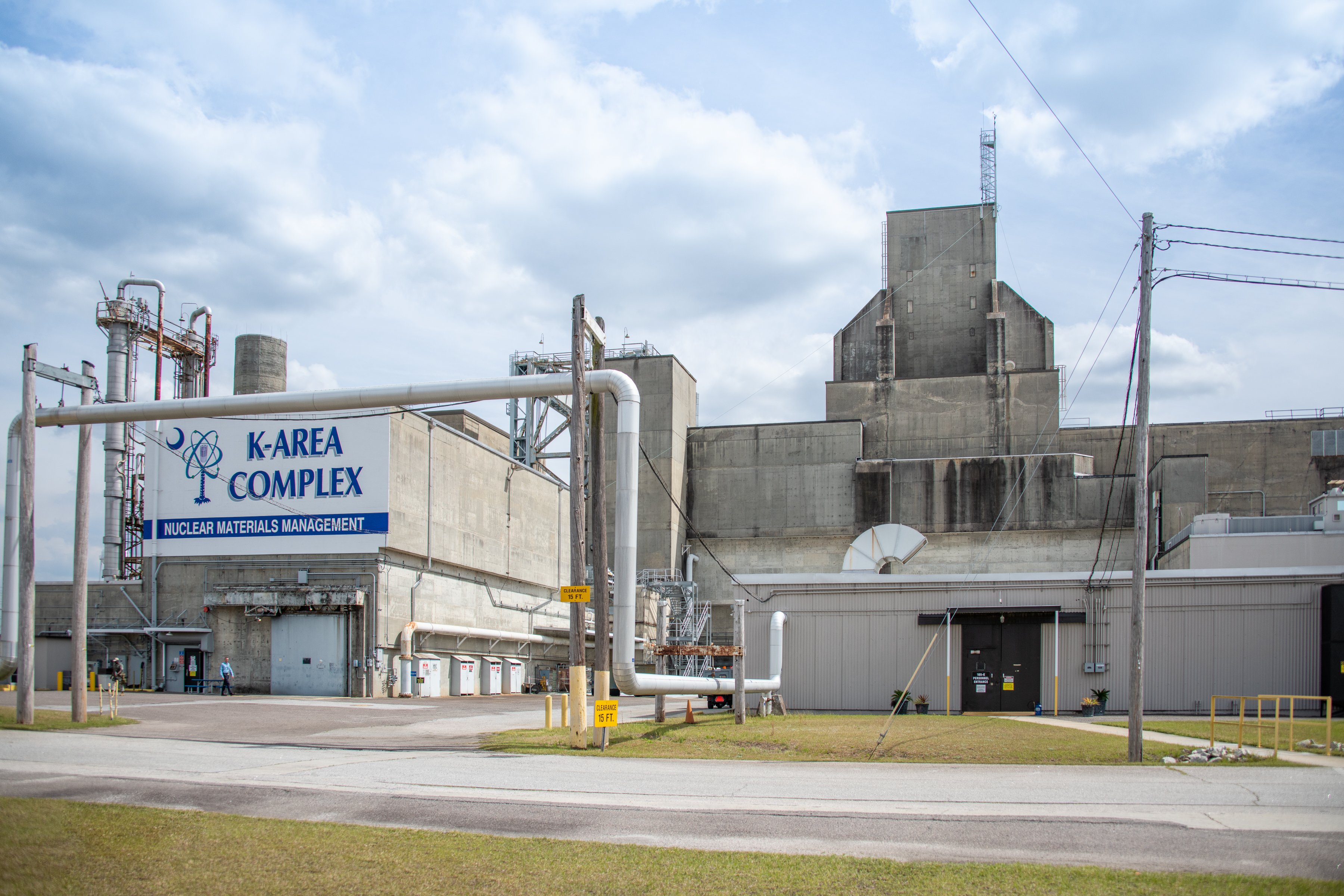
KAC provides for the handling and interim storage of our nation’s excess plutonium and other special nuclear materials (SNM). In addition, KAC is a component of the U.S. commitment to international nonproliferation efforts to store plutonium in a safe and environmentally sound manner. SRS is the recognized leader for managing the plutonium surveillance program throughout the DOE Complex.
The plutonium shipped to KAMS is shipped in robust, state-of-the-art, 9975 shipping containers. Prior to being packaged at the other sites, the plutonium is stabilized in accordance with established standards for safe storage. The plutonium will remain sealed inside the 9975 shipping container as long as it is in KAMS.